Walk into any Rajasthani textile store and you will see two kinds of tie-dye everywhere: bandhani and leheriya. They look different and are made differently — here is how to tell them apart.
Bandhani — the art of tiny dots
The word comes from bandhan, meaning “to tie”. Artisans pinch small points of fabric and tie each one tightly with thread before dyeing. When the threads are opened, each tied point leaves a small undyed dot. Thousands of these dots form flowers, waves and borders.
Leheriya — waves of colour
Leher means “wave”. For leheriya, the fabric is rolled diagonally, tied at intervals and dyed, which creates fine diagonal stripes. Folding and dyeing again in another direction makes a checked pattern called mothra.
Quick comparison
| Bandhani | Leheriya | |
|---|---|---|
| Pattern | Dots, flowers, motifs | Diagonal waves and stripes |
| Technique | Tiny points tied with thread | Fabric rolled and tied |
| Best for | Dupattas, churidar sets, sarees | Kurtis, turbans, summer sarees |
Why not both?
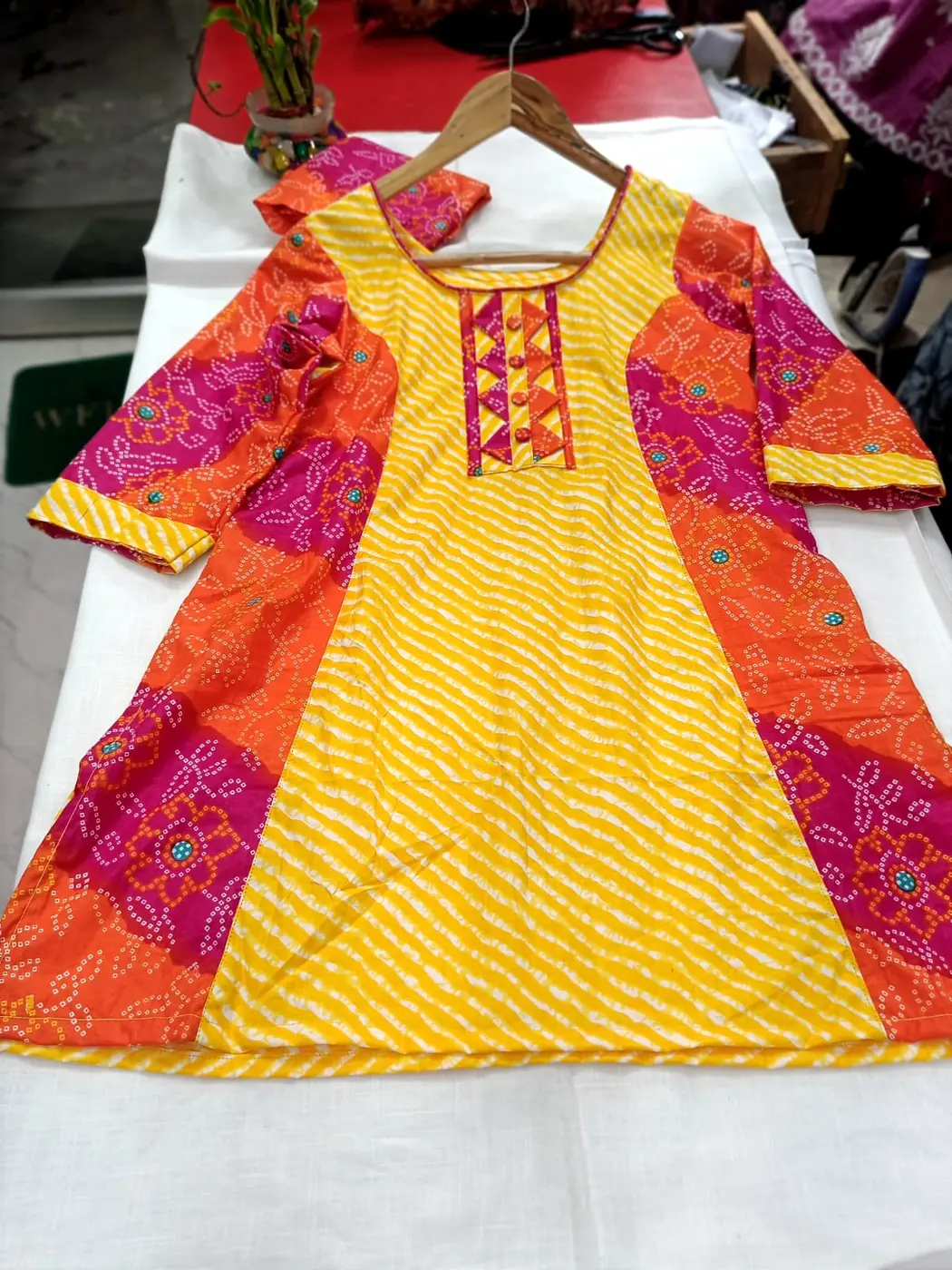
Our Leheriya & Bandhani Panel Kurti puts a yellow leheriya body beside orange-pink bandhani panels — the best of both crafts in one outfit. Explore more in our Bandhani & Leheriya collection.